YVR to Burnaby Airport Transfer: Pickup Locations, Times and Booking Tips
October 29, 2026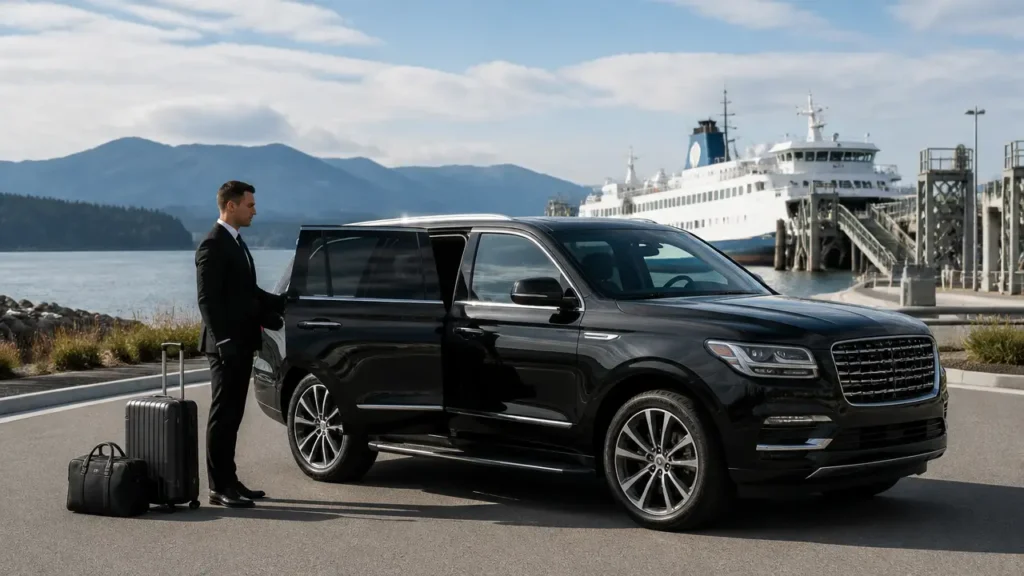
A Vancouver to Victoria private transfer is more than a drive followed by a 1-hour-and-35-minute ferry crossing. The vehicle must reach Tsawwassen, meet the BC Ferries check-in requirements, travel across to Swartz Bay, and then continue north of Victoria to the final address. Planning those stages together is what makes the journey predictable.
How the Vancouver–Victoria vehicle route works
The standard vehicle route begins at a Vancouver hotel, residence, YVR, cruise terminal, or business address. From there, the chauffeur drives to the Tsawwassen terminal, approximately 36 kilometres from downtown Vancouver. After the ferry crossing, the vehicle disembarks at Swartz Bay near Sidney and continues along Highway 17 toward downtown Victoria, the Inner Harbour, Oak Bay, Saanich, or another Vancouver Island destination.
Swartz Bay is not downtown Victoria, so a quote based only on the sailing time can give an incomplete picture. Traffic on the approach to Tsawwassen, terminal queues, sailing availability, loading, unloading, and the final Island drive all affect the total itinerary.
Ferry timing, reservations, and check-in
The Tsawwassen–Swartz Bay sailing is scheduled to take approximately 1 hour and 35 minutes. That is the crossing time, not the door-to-door transfer time. For a booked vehicle, check-in at Tsawwassen opens 60 minutes before departure and closes 30 minutes before departure. The return vehicle check-in rules at Swartz Bay follow the same 60-minute opening and 30-minute closing windows.
Advance reservations are strongly recommended for a chauffeur-driven vehicle, particularly around holiday weekends, Thursday and Friday afternoons and evenings, and Sunday afternoons. A reservation does not remove the need to arrive within the required window. If a client arrives late, the booking may not be honoured and travel may depend on available space and order of arrival.
Ferry capacity can change quickly. The current BC Ferries sailing status is the right place to check schedules and conditions before departure, but live estimates do not include every vehicle waiting outside the terminal.
Choosing the right vehicle
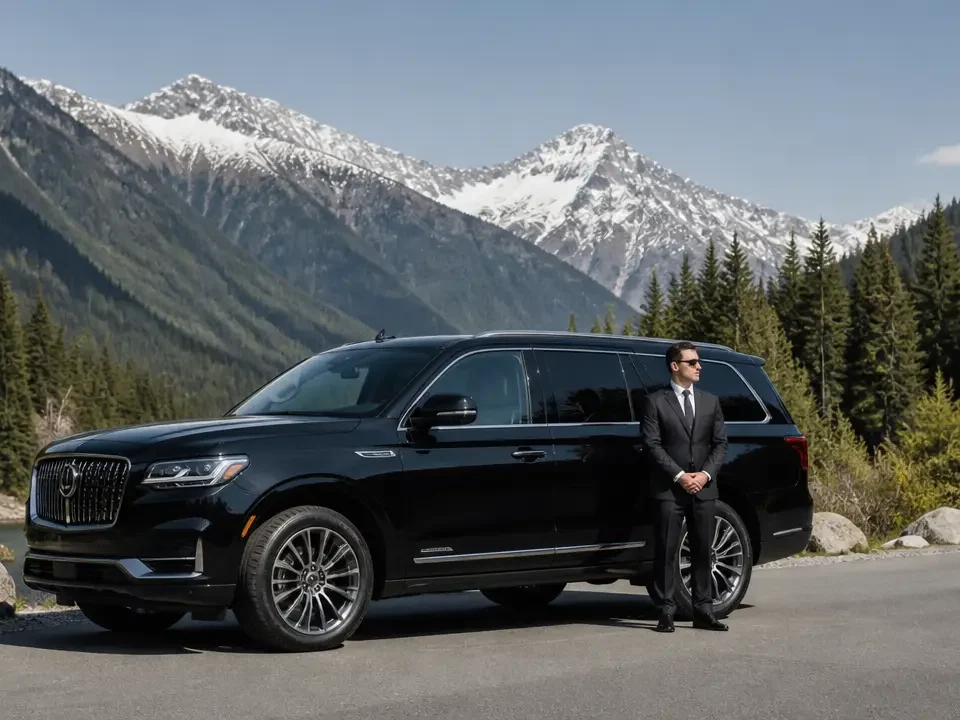
An executive sedan can suit one to three passengers travelling with modest luggage. A luxury SUV is often more practical for families, additional bags, or travellers who want more room between Vancouver and Victoria. Larger groups may need an executive van or Sprinter-style vehicle, subject to the applicable BC Ferries vehicle classification and space limits.
Vehicle dimensions matter. Before confirming the sailing, Royal Limo should verify the assigned vehicle’s height, length, passenger capacity, and luggage capacity. A height that differs from the reservation may invalidate the booking, and vehicles over 20 feet can face additional length restrictions. Some chauffeur vehicles may also need to be handled as commercial or bus-category vehicles rather than standard passenger vehicles.
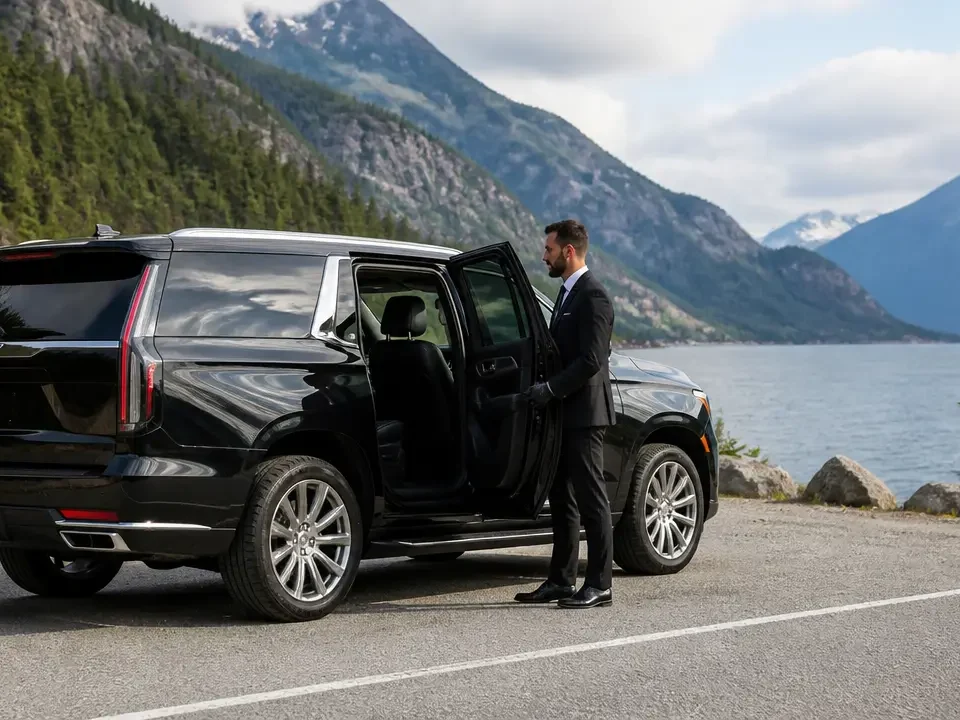
Passengers generally leave the vehicle while the ferry is underway. Take medication, valuables, travel documents, and other essentials from the vehicle before going upstairs. The chauffeur drives onto the ferry, follows deck-crew instructions, and parks among other vehicles; the private-service advantage is the coordinated pickup, luggage help, ferry planning, and onward drop-off.
Building a realistic door-to-door itinerary
A practical itinerary usually includes:
- Pickup at the requested Vancouver or YVR address.
- Travel time to Tsawwassen with a buffer for traffic on Highway 17.
- Booked-vehicle check-in and terminal boarding.
- The scheduled ferry crossing.
- Vehicle unloading at Swartz Bay.
- Private transportation to the final Victoria-area destination.
The quote should reflect the actual service rather than promise a fixed end-to-end duration. Ferry fares, chauffeur time, vehicle category, taxes, gratuity, terminal waiting, additional stops, and ferry booking costs should be explained clearly. For current fare information, use the BC Ferries fare calculator. Royal Limo’s Vancouver limo rates information can also help clients understand the factors that affect a private chauffeur quote.
Private transfer or foot passenger travel?
Walking onto the ferry can avoid vehicle-deck reservation limits, but it leaves passengers to arrange transportation between Vancouver and Tsawwassen, then from Swartz Bay into Victoria. Public transit connections are available, but they add transfers, luggage handling, and timing decisions. A private vehicle is especially useful for families, executives, wedding groups, cruise passengers, and travellers carrying strollers, sports equipment, or several pieces of luggage.
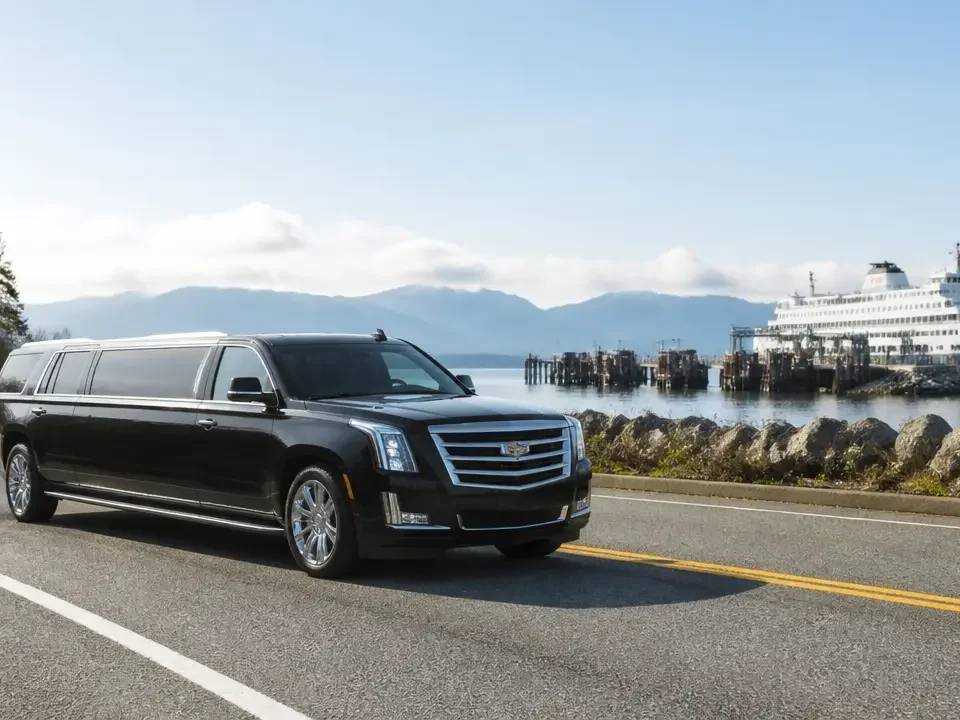
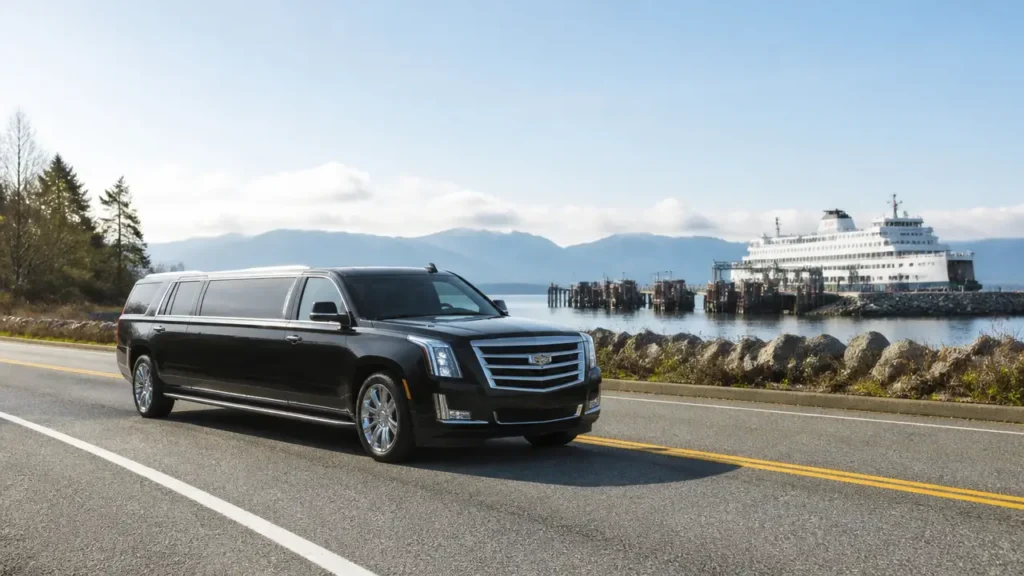
Clients extending their trip into a leisure itinerary can also review private wine-tour planning in British Columbia when winery visits are part of the wider journey. For a visual reference when comparing vehicle styles for group travel, the limousine image gallery offers additional context.
Booking checklist
When requesting a Vancouver to Victoria private transfer, provide the pickup address, desired arrival time, passenger count, luggage dimensions, ferry direction, preferred sailing, final Island address, and any required stops. Ask which vehicle will be assigned and how it will be classified for the ferry. Schedules, fares, reservation windows, terminal rules, and sailing availability can change, so confirm current details with BC Ferries when booking.
The most reliable plan treats the ferry as one part of a coordinated journey—not as the entire journey. That approach leaves room for terminal procedures and changing road or sailing conditions while keeping the passenger’s transportation continuous from the first address to the last.