Canada Place to YVR After a Cruise: Timing, Luggage and Transfer Planning
November 8, 2026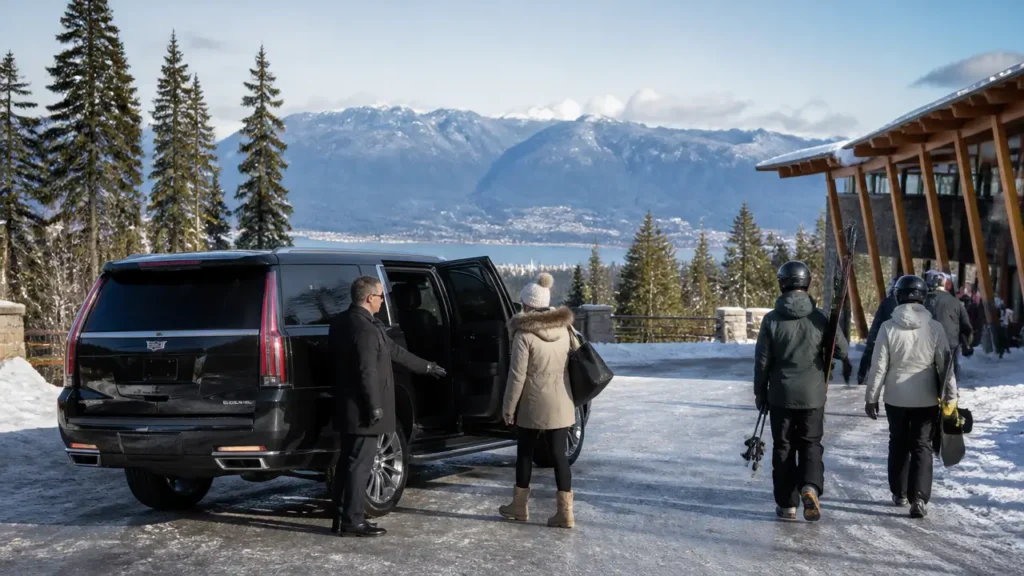
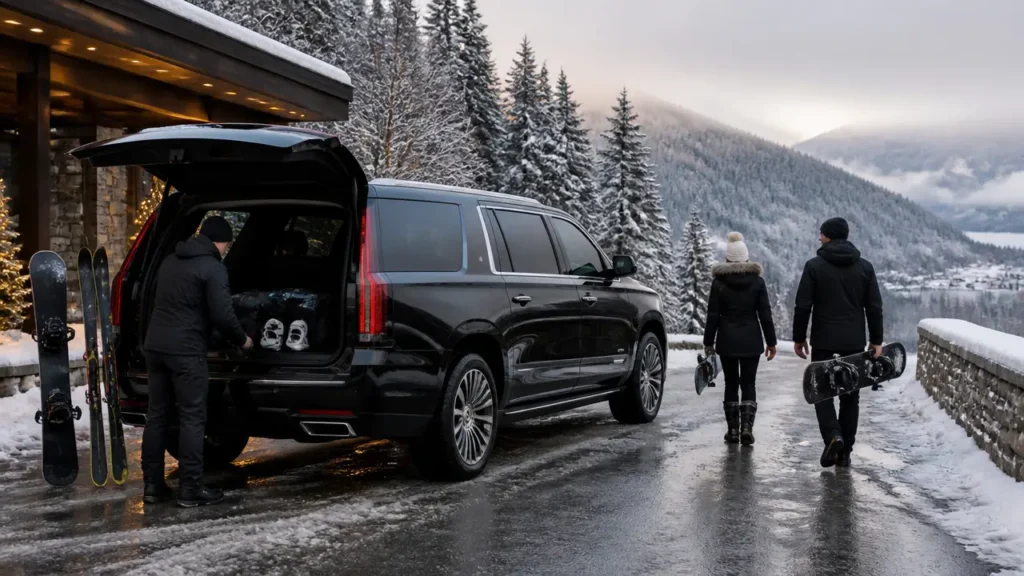
A Vancouver to Grouse Mountain ski transfer is easiest to manage when the vehicle, equipment, road conditions and mountain pickup point are arranged before departure. A private chauffeur can collect your group from a Vancouver hotel, residence or YVR, but the details matter: skis and snowboards need suitable space, winter weather can change the route, and Grouse Mountain does not allow vehicles to stop directly in front of the gondola.
Choose the right vehicle for ski equipment
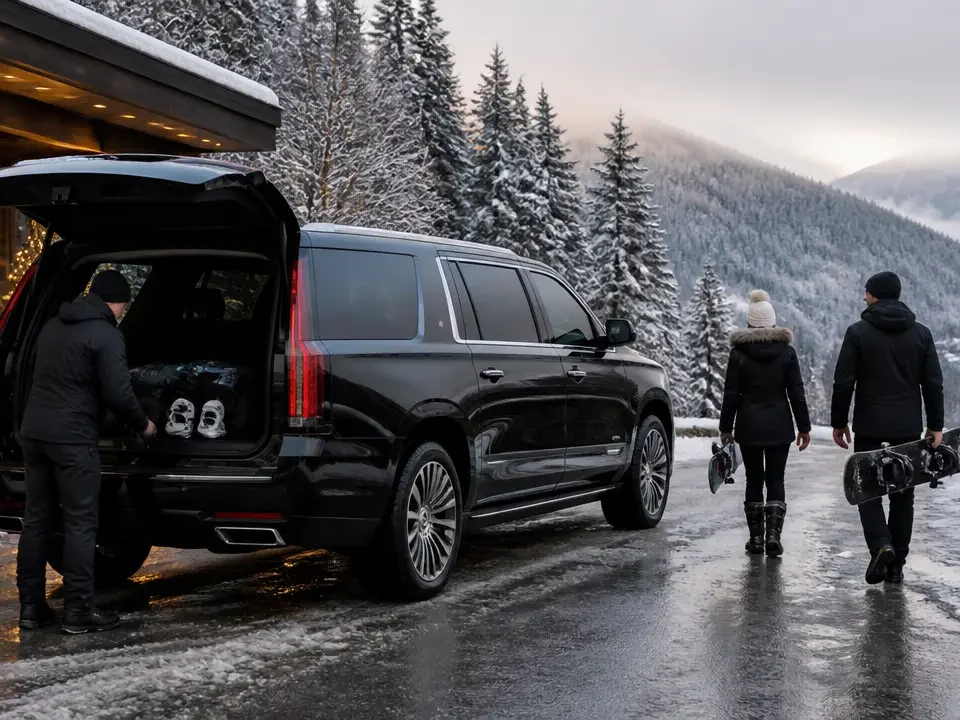
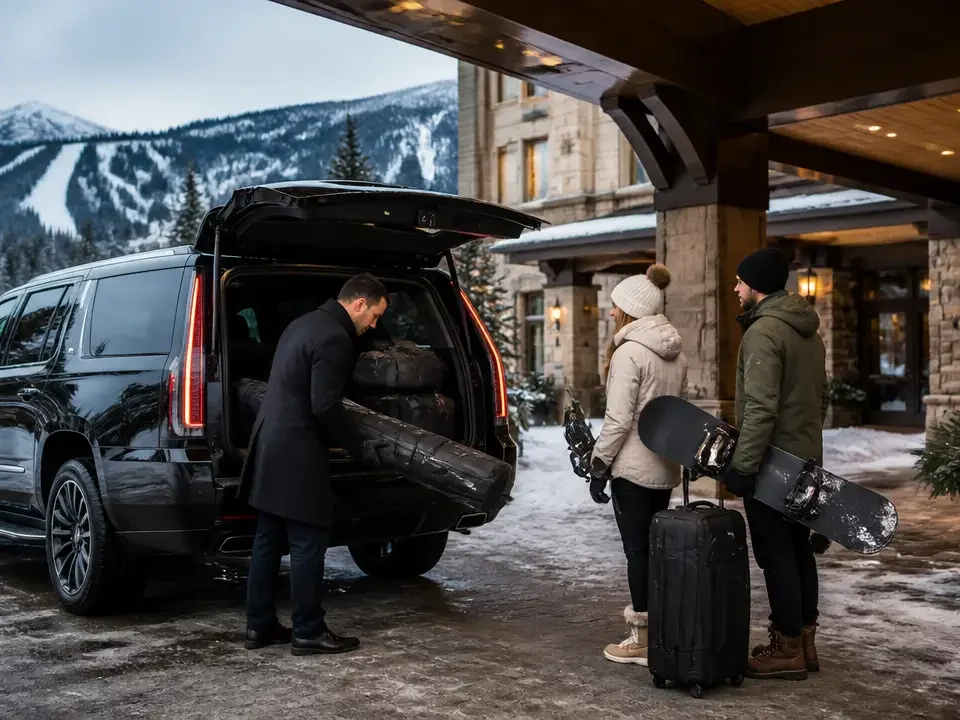
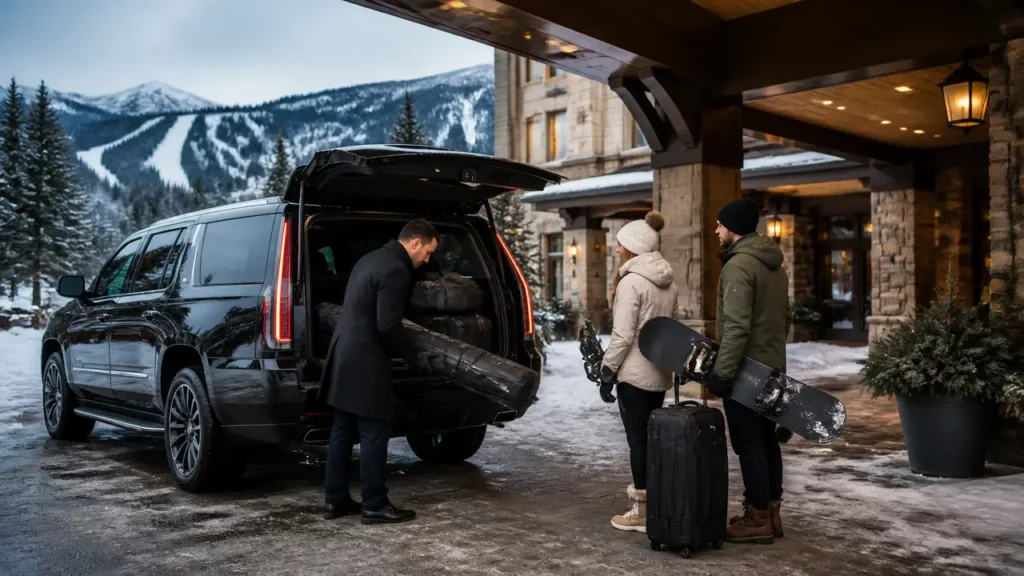
Vehicle choice should be based on both passenger count and the equipment travelling with the group. A sedan may work for one or two passengers carrying limited soft gear, but an SUV is generally more practical for several skiers, ski bags, boots, helmets and winter clothing. Larger groups may need a Sprinter or another van-sized vehicle.
When requesting a quote, provide the number and length of skis and snowboards, along with the number of boot bags, helmets, hard cases and regular suitcases. Capacity varies by vehicle and by how much passenger seating is required, so do not assume that a particular limousine can hold every item without confirmation. Wet boots and outerwear should be placed in contained bags to help protect the vehicle interior.
Renting equipment at the mountain can make the transfer simpler. Grouse Mountain lists rentals for skis, snowboards, boots, poles, helmets and snowshoes. Its FAQ recommends booking online by 5 p.m. at least one day ahead. The mountain’s lockers are intended for smaller belongings and are not designed for ski or snowboard bags and boots, so plan your equipment storage before you leave.
Winter roads between Vancouver and Grouse Mountain
The official route from downtown generally follows Georgia Street, crosses the Lions Gate Bridge, continues along Marine Drive and Capilano Road, then climbs approximately 5 km to the mountain. Drivers may also use Highway 1 and the Capilano Road exit. Grouse Mountain describes the drive as approximately 15 minutes from downtown under normal conditions, but that should not be treated as a guaranteed winter journey time.
Bridge congestion, rain, snow, collisions and traffic near North Vancouver can all affect the schedule. For a morning ski start, build in a wider operating window rather than booking the vehicle to arrive immediately before a lesson or reservation. Check DriveBC road conditions and highway cameras before departure, and ask the operator to review the forecast and access conditions when confirming the ride.
British Columbia’s winter-tire and chain requirements depend on the route and its signs. Most designated routes require compliant winter tires or chains between October 1 and April 30, while some routes have an earlier March 31 end date. Lower Mainland roads can have different requirements, and private ski-hill roads may impose their own rules. A legal winter tire is marked M+S or with the three-peaked mountain and snowflake symbol and must have at least 3.5 mm of tread; the province recommends the mountain/snowflake rating for stronger winter traction. The transportation provider is responsible for using a properly equipped vehicle and adjusting the trip when conditions warrant it.
Grouse Mountain parking and the correct drop-off area
A private ski transfer can remove the need to search for a parking space, but passengers still need to know where the vehicle will stop. Grouse Mountain directs passenger pickup and drop-off to the signed areas in Parking Lot A and its designated 10-minute spaces. Vehicles should not use the area directly in front of the Blue Grouse Gondola or the Red Skyride as a passenger loading point.
All base parking lots are paid parking. The mountain currently lists a $10 three-hour ticket, a $12 day ticket and a $60 annual pass, although prices and payment rules can change. Check the official Grouse Mountain location and parking information before driving. If a family member is meeting the vehicle, agree on the signed area in Lot A rather than simply saying “the gondola.”
For visitors comparing a private ride with other winter options, Grouse Mountain also lists a seasonal shuttle from Canada Place on weekends and holidays, subject to availability and eligibility requirements. Public transit options include SeaBus service to Lonsdale Quay followed by route 236, with route 232 connecting Grouse Mountain and Phibbs Exchange. Schedules and operating conditions should be checked on the day of travel.
Plan the return pickup before the final run
The return journey is where ski-day schedules often become less precise. Equipment must be returned, boots changed, washrooms used and the group walked back to the agreed loading area. Reserve a pickup time with a buffer after the final run, and provide the driver with the exact Lot A pickup instructions and a working phone number.
Do not assume that a limousine can wait indefinitely in front of the gondola. Confirm whether waiting time, parking, additional stops and any peak-period charges are included in the quotation. Royal Limo’s Vancouver limousine rates guide can help with the questions to ask when comparing quotes, while the final price should reflect the date, pickup locations, vehicle, passenger count and requested stops.
Booking checklist for a Grouse ski transfer
- Give the exact hotel, residence or airport pickup address and loading instructions.
- Confirm the number of passengers and every ski, snowboard, bag and case.
- State the desired mountain arrival time, lesson time or rental reservation.
- Ask which vehicle will be assigned and what its confirmed gear capacity is.
- Confirm the signed Grouse Mountain drop-off and return pickup area.
- Share a mobile number that will be answered during the trip.
- Allow extra time for winter roads, bridge traffic and changing conditions.
Passengers considering the service itself can review Royal Limo’s luxury limousine options in Vancouver before requesting a vehicle. For a wider comparison of winter travel planning, the company’s Vancouver to Whistler transfer guide covers a longer mountain journey, although Grouse has its own local access and loading rules.
Some visitors extend a Vancouver winter trip with a separate food or leisure outing after the slopes. For planning a later Fraser Valley winery visit rather than combining it with ski equipment, see private wine-tour ideas in the region. If you want to see examples of limousine interiors and vehicle presentation, the Vancouver limo image gallery offers additional visual context.
The most reliable Grouse Mountain transfer is planned around the actual base-area procedure: book enough equipment space, allow for winter conditions, use Lot A for passenger loading and leave time for the return walk. Those details make the ride more predictable than relying on a fixed travel-time estimate or an assumed gondola-front pickup.