How to Choose a Vancouver Airport Transfer Vehicle for Your Group
October 14, 2026
A Vancouver to Seattle transfer takes approximately three to four hours by road in normal conditions, but that is only the driving estimate. Border processing, traffic around Vancouver and Seattle, weather, pickup delays and planned stops can materially extend the itinerary. A private chauffeur makes the journey more comfortable and coordinated, but it does not remove the normal immigration and customs process.
This guide explains what to prepare before booking, how to build a realistic schedule and how to match your luggage to the right vehicle.
How long is the drive from Vancouver to Seattle?
The usual route runs from Vancouver along Highway 99 to the U.S. border, then south on Interstate 5 toward Seattle. Visit Seattle describes the road journey as roughly three to four hours, with border waits and traffic affecting the final duration. For current route context, travelers can review Visit Seattle’s Vancouver–Seattle travel information.
That estimate should not be used as a guaranteed arrival time. For a hotel-to-hotel trip, allow additional time for the pickup itself, loading luggage and crossing the border. If the destination is Sea-Tac Airport, a cruise terminal, a conference, wedding or same-day event, use a larger buffer. An appointment that cannot be missed should be planned around the possible border delay rather than the shortest advertised drive time.
A practical itinerary might look like this:
- Pickup at a Vancouver residence or hotel
- Travel through Richmond and Surrey toward the Douglas–Peace Arch or Pacific Highway crossing
- Customs and immigration processing
- Southbound travel on I-5 through Bellingham and toward Seattle
- Drop-off at a Seattle hotel, airport, cruise terminal or event venue
Which border crossing will the chauffeur use?
Peace Arch is the direct crossing for the Highway 99–I-5 corridor. Pacific Highway is a nearby alternative reached through B.C. Highway 15 and Washington State Route 543. Both crossings operate 24 hours daily, according to the Washington State Department of Transportation’s border information.
The best crossing can depend on traffic, construction, weather and current queues. A chauffeur may assess the approach and select the practical route, but passengers should not expect a private vehicle to receive priority or bypass inspection. Border officers control admission and processing, and travelers must follow their instructions about leaving or remaining in the vehicle.
Check the official CBSA border wait-time information before departure. DriveBC and WSDOT also provide cameras and road information for the approaches. Conditions can change after pickup, so checking again while approaching the border is sensible, particularly during holidays, heavy rain, winter weather and major events.
Documents and border responsibilities
Every passenger must carry the document required for their nationality and immigration status. U.S. citizens entering by land or sea generally need a Western Hemisphere Travel Initiative-compliant document, such as a passport, passport card, enhanced driver’s license or eligible trusted-traveler card. Eligible Visa Waiver Program travelers entering the United States by land need approved ESTA authorization before seeking admission.
Children may have additional documentation requirements, especially when traveling with only one parent or with another adult. Review current requirements and any consent-letter guidance before travel. A chauffeur can provide transportation and route support, but cannot guarantee admission. Passengers remain responsible for passports, visas, ESTA authorization, permits and supporting documents.
Luggage planning should start before the quote
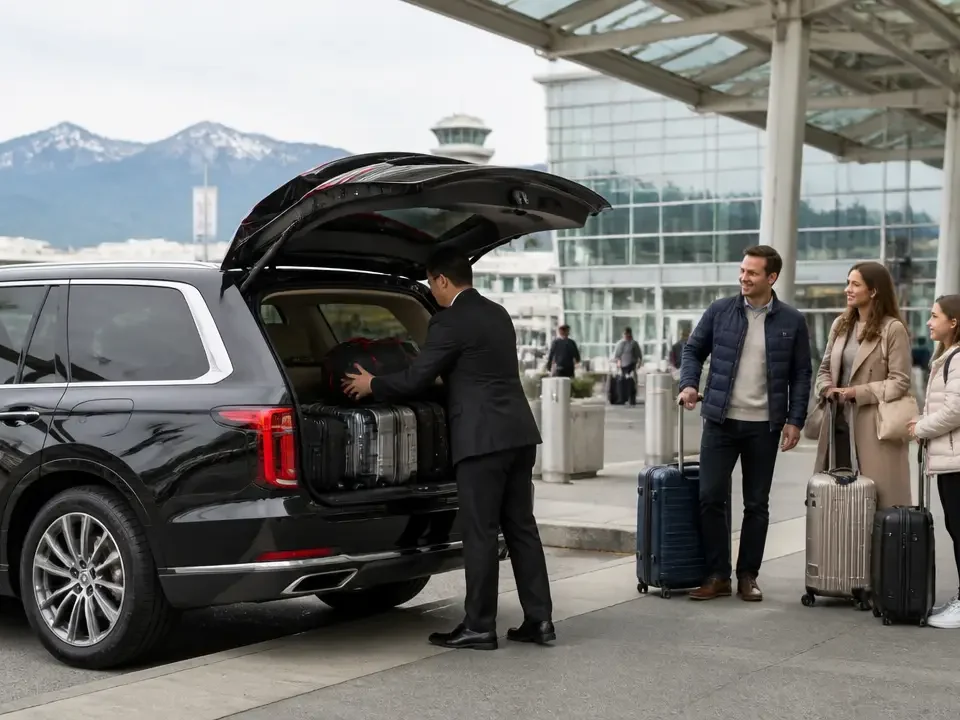
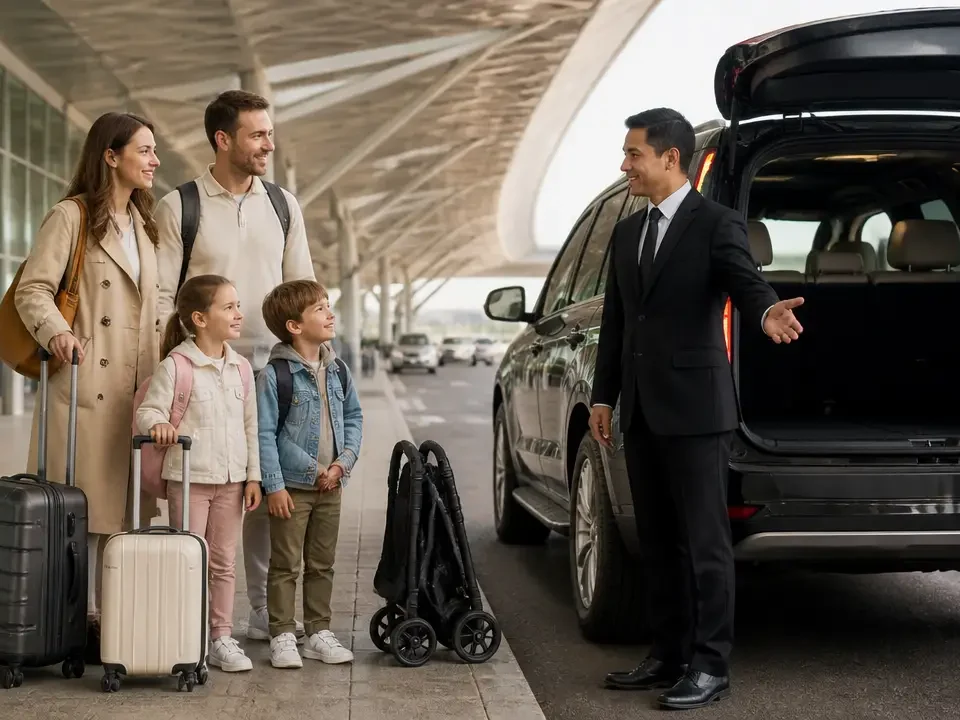
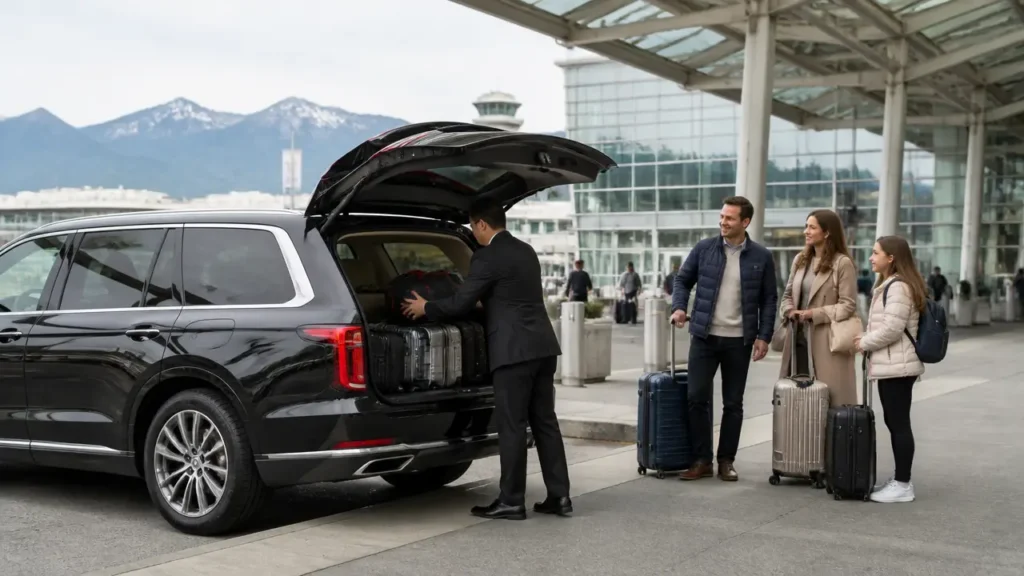
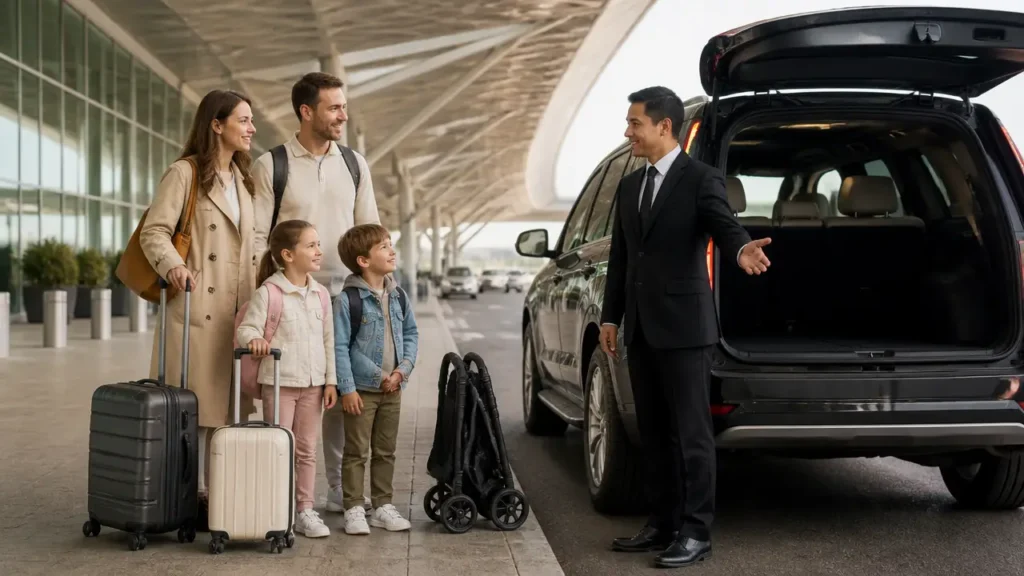
Vehicle choice should be based on luggage as well as passenger count. A group with four travelers and four large suitcases may need a different vehicle from four travelers carrying only small carry-ons. Tell the booking team about:
- Checked-size suitcases and carry-ons, with an approximate count
- Strollers, wheelchairs or mobility equipment
- Golf clubs, skis, bicycles or musical instruments
- Oversized, rigid or unusually shaped cases
- Child seats or booster seats
- Pets and their carriers
| Travel situation | Vehicle-planning approach |
|---|---|
| One or two passengers with light luggage | A luxury sedan may be suitable, subject to the confirmed number and size of bags. |
| Family or small group with several suitcases | An SUV often provides more flexible luggage space and easier loading. |
| Large group, extensive luggage or equipment | Ask about an executive van or Sprinter-style vehicle and provide dimensions in advance. |
| Skis, bicycles, mobility devices or other bulky items | Obtain written vehicle confirmation before relying on standard trunk or cabin space. |
The table is a planning guide, not a capacity guarantee. Usable luggage space varies by vehicle configuration and inventory. Royal Limo should confirm the assigned vehicle after receiving the passenger and luggage details.
What can you bring across the border?
Declare goods rather than guessing. Canada-bound travelers may need to declare food, plants, animals, weapons, cannabis, commercial goods and currency or monetary instruments of CAN$10,000 or more. Undeclared items can lead to seizure, penalties or prosecution. The CBSA advises travelers to have declaration information ready.
For the United States, declare food, agricultural products, plants, meat, animal products and wildlife items. Many products are restricted or prohibited, and declared items may be inspected, abandoned or confiscated. Before the return crossing, remove questionable food and agricultural products where possible, and keep receipts and original packaging for relevant purchases.
Alcohol, tobacco, medication, gifts and cash have rules that can vary according to the traveler, quantity, origin and destination. Do not rely on a general allowance from someone else’s trip. Review current guidance from U.S. Customs and Border Protection on items that must be declared, and ask the relevant border agency when the situation is unclear.
Booking details that prevent avoidable delays
When requesting a Vancouver–Seattle quote, provide the pickup address and city, destination address and city, travel date, desired pickup time, passenger count, luggage by size and any oversized equipment. Include a phone number that works in both Canada and the United States, plus details about children, pets and the direction of travel.
For a hotel pickup, identify the hotel entrance or designated loading area. For YVR, provide the terminal and flight information where applicable. For a Seattle airport or cruise-terminal drop-off, state the terminal or airline precisely. These details help the chauffeur plan the handoff, but they do not change border requirements or guarantee a specific arrival time.
Before confirming a reservation, review the company’s limousine transportation terms and conditions alongside the quoted service details. This is especially useful for cross-border trips involving waiting time, cancellations, additional stops or changes to the vehicle requirement.
Weather, stops and return-trip planning
Rain, snow, visibility, congestion and incidents can affect both the Lower Mainland approach and I-5. DriveBC warns that conditions can be unpredictable and that winter tires or chains may be required in some conditions. Check road advisories, cameras and the forecast before leaving, then allow more time when conditions are poor.
Stops should be agreed in advance when the schedule is tight. A rest stop, meal, fuel stop or luggage adjustment can add meaningful time to a cross-border itinerary. If your plans include a Fraser Valley leisure stop before or after Seattle, seasonal conditions can affect the timing; this Fraser Valley wine-tour timing guide can help with that separate part of the itinerary.
Before you book
- Confirm that every passenger has the correct travel document and authorization.
- Check current border information rather than relying on an old wait-time estimate.
- Build a buffer for customs, traffic, weather and loading time.
- List every suitcase and oversized item before selecting the vehicle.
- Declare food, agricultural products, medication, alcohol, tobacco, cash and other regulated goods as required.
- Ask the chauffeur company to confirm the vehicle, pickup location and any special equipment.
A private chauffeur transfer is most useful when the itinerary is planned with these variables in view: one coordinated vehicle, door-to-door service and luggage assistance can simplify the day, while realistic timing and complete documentation prevent avoidable surprises at the border.